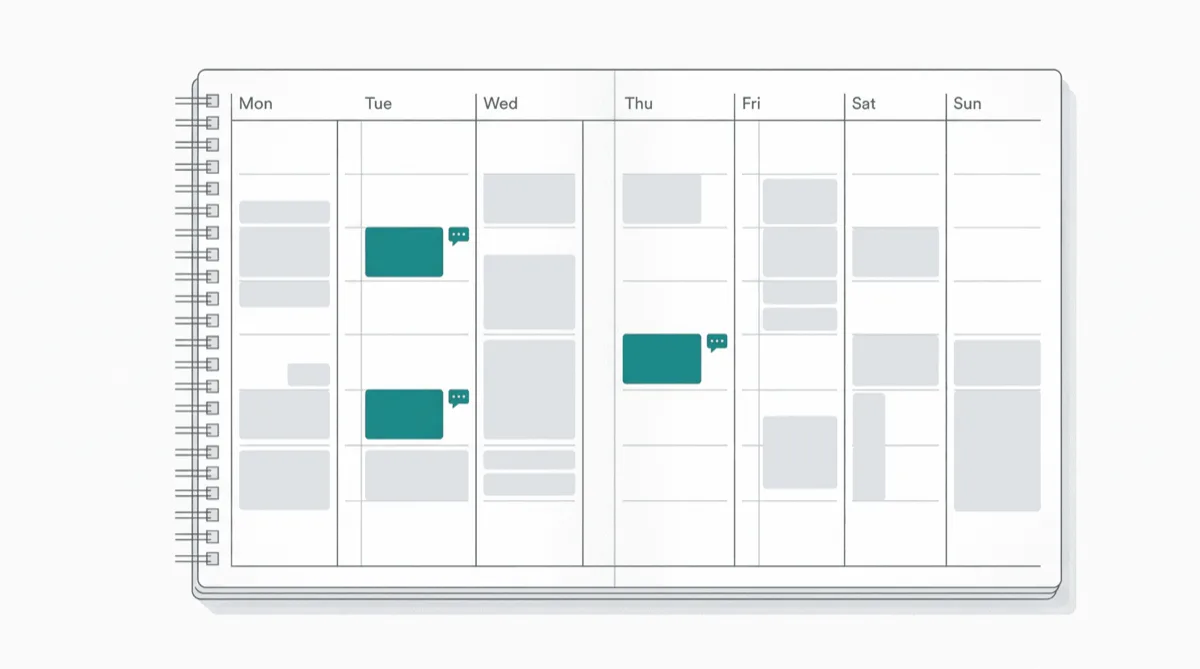
Every appointment-based business has the same bottleneck: the front desk. Calls come in bursts — a salon gets 15 enquiries between 12 PM and 2 PM, a clinic's phone rings non-stop during lunch when staff are at reduced capacity, a tutoring centre receives messages from parents all evening. Each missed call or unanswered message is a potential booking that walks away.
A WhatsApp Business case study with Be@me, a dental aligner provider operating across Asia-Pacific including Hong Kong, reported a 6X increase in appointment bookings and a 38% reduction in cost per lead after implementing automated WhatsApp booking flows. These are not marginal improvements — they represent a structural change in how appointment-based businesses capture demand.
This guide covers how clinics, salons, tutoring centres, and professional services firms are using AI agents to convert enquiries into bookings, reduce no-shows, and free up front-desk staff for the work that actually requires a human.
Why Are Appointment-Based Businesses Particularly Suited for AI?
Three characteristics make this vertical the strongest fit for AI customer service.
Enquiries are highly structured. The vast majority of messages follow a predictable pattern: "How much is X?", "Do you have availability on Saturday?", "What do I need to bring?" These are information-retrieval questions with clear, factual answers.
The conversion path is linear. Interest → information → qualification → booking. Unlike retail (where browsing is open-ended) or restaurants (where group dynamics complicate decisions), professional services have a direct line from enquiry to scheduled appointment. AI excels at guiding customers along linear paths.
Timing is everything. When someone messages a clinic about a treatment, they are in an active decision-making moment. A response in 30 seconds captures that intent. A response in 12 hours often does not — the customer has already called a competitor or lost motivation. Speed-to-response is disproportionately valuable in this vertical.
What Do Clients and Patients Actually Message About?
Booking requests are the core: availability, treatment duration, rescheduling, cancellation policies, weekend slots, and deposit requirements. These messages convert directly into revenue when handled promptly.
Pricing is the second most common topic. "How much is a consultation?" "What does the package include?" "Is there a first-visit discount?" Transparent, instant pricing answers build trust and move the conversation toward booking.
Eligibility and intake questions include symptoms or service fit, age requirements, contraindications, required documents, and preparation instructions. These are where AI adds particular value — collecting structured intake information before the human consultation begins saves appointment time and improves outcomes.
Logistics cover location, parking, directions, what to bring, and how to prepare. Highly repetitive, easy to automate, and surprisingly common — many businesses answer the same parking question 20 times per week.
Follow-up messages about post-procedure care, after-service instructions, and next appointment recommendations. AI can deliver standardised follow-up content on schedule, reducing the administrative burden on practitioners.
Sensitive cases — complaints, anxiety about procedures, urgent medical concerns, refund requests — require immediate human handoff. AI should acknowledge, collect minimal context, and route without delay.
What Results Are Appointment-Based Businesses Seeing?
| Metric | Result | Source |
|---|---|---|
| Appointment bookings | 6X increase (year-over-year) | Be@me WhatsApp case study (2023–2024) |
| Cost per lead | 38% reduction | Be@me WhatsApp case study (2023–2024) |
| Booking rate via WhatsApp | +25% increase | MEDILASE/Omnichat case study (2026) |
| Appointment show-up rate | +18% improvement | MEDILASE/Omnichat case study (2026) |
| Beauty service bookings via WhatsApp | +30% attributable to WhatsApp | Benefit Cosmetics case study |
Two patterns stand out in this data. First, the booking improvements are large — not 5% marginal gains, but multiples and double-digit percentages. This reflects the high conversion value of instant responses in appointment-based businesses. Second, the MEDILASE show-up rate improvement (+18%) suggests that AI-driven reminders and confirmation flows reduce no-shows meaningfully — a direct impact on revenue utilisation.
How Are Professional Services Using AI Agents?
24/7 booking capture
The most impactful deployment: AI agents accept booking enquiries at any hour, collect the necessary information (service type, preferred date/time, contact details), and either confirm the appointment or queue it for staff confirmation at the next business opening.
For a clinic that closes at 7 PM but receives 30% of its booking enquiries between 7 PM and 11 PM, this single capability can increase monthly bookings by double digits.
Structured intake and qualification
Before a human consultation, the AI agent collects structured information through a conversation flow: the client's primary concern, relevant history, budget expectations, scheduling constraints, and any contraindications. The practitioner receives a pre-filled intake summary — saving 5 to 10 minutes per appointment and allowing the consultation to focus on assessment and recommendation rather than data collection.
Automated reminders and no-show reduction
No-shows are the silent revenue killer for appointment-based businesses. AI agents send automated reminders at 24 hours and 2 hours before the appointment, with a one-tap option to confirm or reschedule. The MEDILASE case study's 18% improvement in show-up rates demonstrates the practical impact of this simple automation.
FAQ handling during peak periods
A salon that receives 40 messages during a Saturday morning rush — half asking about prices and availability — can automate those 20 conversations entirely. Staff focus on the clients in the chair; AI handles the messages in the queue.
What Should Appointment-Based Businesses Keep Away from AI?
Clinical or medical advice. AI should never provide diagnosis, treatment recommendations, or clinical guidance. It can share factual information ("The consultation takes 45 minutes and includes X, Y, Z") but should route any health-related questions to a qualified professional.
Anxiety and emotional situations. A patient nervous about a procedure needs reassurance from a human, not a chatbot. AI should recognise emotional language and escalate immediately.
Billing disputes and refund decisions. These require reviewing specific case details and exercising business judgment. AI collects the details; a human makes the decision.
Confidential information handling. In healthcare and legal services, data sensitivity is paramount. AI should collect minimal necessary information and avoid storing or transmitting sensitive health or legal data beyond what is required for the booking.
How Do You Set Up an AI Agent for an Appointment-Based Business?
Map your top 10 questions. Open your WhatsApp or call log. The same 10 questions probably account for 70% of all enquiries. Document the ideal answer for each one — that is your AI knowledge base.
Build a booking flow. A conversation flow that asks: What service are you interested in? → What date and time work for you? → Have you visited us before? → Contact name and phone number. This structured approach ensures you capture every booking-ready enquiry.
Build an intake flow (optional but high-value). For services that require pre-consultation information — clinics, legal practices, tutoring — create a flow that collects the relevant details before the appointment. This saves practitioner time and improves the client experience.
Set up automated reminders. Configure confirmation and reminder messages at 24 hours and 2 hours before each appointment. Include a one-tap reschedule option to reduce no-shows rather than last-minute cancellations.
Define strict handoff rules. Any message involving complaints, medical/legal questions, emotional distress, or billing disputes should trigger immediate human handoff with full conversation context.
Several AI platforms offer no-code conversation flow builders that let appointment-based businesses create booking, intake, and reminder flows. Omago provides hands-on setup support during onboarding — useful for clinics that need careful configuration around sensitive topics and handoff rules. Respond.io offers strong multichannel automation with WhatsApp, Instagram, and Messenger in one inbox. For Hong Kong beauty and wellness businesses, Omnichat powers the Benefit Cosmetics and MEDILASE deployments mentioned above. Evaluate based on your channel mix, message volume, and whether you need guided setup or prefer self-service.
Frequently Asked Questions
Can AI actually book appointments, or does it just collect information?
Both models work. If your business uses a digital booking system, AI can integrate with it to show real availability and confirm bookings directly. If you manage appointments manually (spreadsheet, paper diary), AI collects the customer's preferred date, time, and service, then sends a structured booking request to your team for manual confirmation. Either way, the customer receives an immediate response rather than silence.
How do AI reminders reduce no-shows?
Automated reminders sent 24 hours and 2 hours before the appointment serve two purposes: they remind the client (preventing genuine forgetfulness) and they provide an easy rescheduling option (converting potential no-shows into rebooked appointments). The MEDILASE case study reported an 18% improvement in show-up rates — a significant revenue impact for any appointment-driven business.
Is AI appropriate for healthcare or legal practices?
Yes, with strict boundaries. AI handles scheduling, intake collection, FAQ answers, and logistics. It should never provide clinical opinions, legal advice, or access to confidential records. The key is clear handoff rules: anything that requires professional judgment is routed to a qualified human immediately. Many clinics and practices find that AI is most valuable precisely because it frees practitioners from administrative messaging — letting them focus on client care.
How many bookings can a small clinic expect to gain from AI?
This depends on your current enquiry volume and response time. If you currently miss or delay responses to 10+ booking enquiries per week (common for businesses that rely on phone-only or manual WhatsApp replies), recovering even 30% of those through instant AI response could mean 3+ additional bookings per week. At a typical service value of $50–$200, the monthly impact quickly exceeds the cost of any AI platform.
What about PDPO (Personal Data Privacy Ordinance) compliance in Hong Kong?
AI platforms that handle customer data should collect only the minimum information necessary for the booking, store data securely, and provide clear data handling policies. For healthcare and legal practices, additional care is needed: avoid collecting sensitive health or legal information through AI chat, and ensure patients or clients consent to AI-assisted communication. Reputable AI platforms provide data handling documentation — ask about it before committing.
Sources: WhatsApp Business — Be@me, WhatsApp Business — Benefit Cosmetics, MEDILASE/Omnichat case study (2026), IBM — AI Customer Service Chatbots, National Restaurant Association State of the Restaurant Industry 2026.